


 & more |
GUIDE · 2026
How to Quit & Stop Chewing Tobacco
A science-backed, practical guide to break nicotine addiction, control cravings, and stay tobacco-free long term.
Quick Answer
To quit chewing tobacco successfully, you must fix three layers of addiction simultaneously — not just one.
- Chemical dependence: Nicotine creates dopamine spikes, making your brain dependent on external stimulation instead of natural reward cycles.
- Behavioral habit: The act of chewing becomes automatic through repetition (after meals, with chai, during stress).
- Triggers: Emotional and situational cues like boredom, anxiety, or social environments reinforce usage.
The most effective way to quit gutkha permanently is to combine gradual reduction, trigger awareness, habit replacement, and structured consistency over time.
Why Quitting Chewing Tobacco Matters
Chewing tobacco (gutkha, paan, khaini) exposes the mouth to nicotine and carcinogens for prolonged periods. Unlike smoking, where exposure is short, smokeless tobacco stays in direct contact with oral tissues, increasing long-term damage.
According to the World Health Organization (WHO), smokeless tobacco significantly increases the risk of oral cancer, gum disease, and cardiovascular problems.
Research from NCBI shows areca nut — a key ingredient in gutkha — is linked to oral submucous fibrosis, a condition where the mouth gradually loses flexibility and opening capacity.
Long-term users commonly experience:
- Persistent white or red patches (precancerous signs)
- Tooth decay and gum recession
- Reduced taste sensitivity
- Jaw stiffness and burning sensation
- Increased risk of oral and throat cancers
The good news: within weeks of quitting, the body starts repairing itself — inflammation reduces, breath improves, and oral tissues begin recovery.
The Science Behind Chewing Tobacco Addiction
Chewing tobacco addiction is not just a habit — it is a neurological loop driven by brain chemistry.
- Nicotine → Dopamine Release: When you consume gutkha, nicotine reaches the brain within seconds and releases dopamine (reward chemical).
- Repeated Use → Brain Adaptation: Over time, the brain reduces natural dopamine production, making you dependent on tobacco just to feel normal.
- Areca Nut Effect: Gutkha also contains arecoline, which stimulates the nervous system, creating a second layer of addiction.
According to the CDC, nicotine alters brain reward pathways and impulse control, making cravings stronger over time.
Research published on NCBI confirms that areca nut (a key ingredient in gutkha) is directly linked to oral fibrosis and increased cancer risk.
A Real Story: From “Just One Pouch” to Addiction
“I started with one pouch during chai in college. Within months, it became 8–10 times a day. I wasn’t enjoying it anymore — I just felt uncomfortable without it.”
This pattern is extremely common among gutkha users.
Addiction doesn’t start with dependence — it starts with repetition. Over time, your brain associates gutkha with:
- Relaxation after meals
- Focus during work
- Relief during stress
Eventually, it stops being a choice and becomes automatic behavior.
Withdrawal Timeline: What to Expect After Quitting
Strong cravings, irritability, headaches, and restlessness. This is the toughest phase physically.
Cravings reduce slightly but triggers (chai, stress) become more noticeable.
Physical withdrawal ends, but habit cravings continue. Most relapses happen here.
Brain starts adapting to normal dopamine levels. Cravings become less frequent.
Habit loop weakens significantly. You feel normal without tobacco.
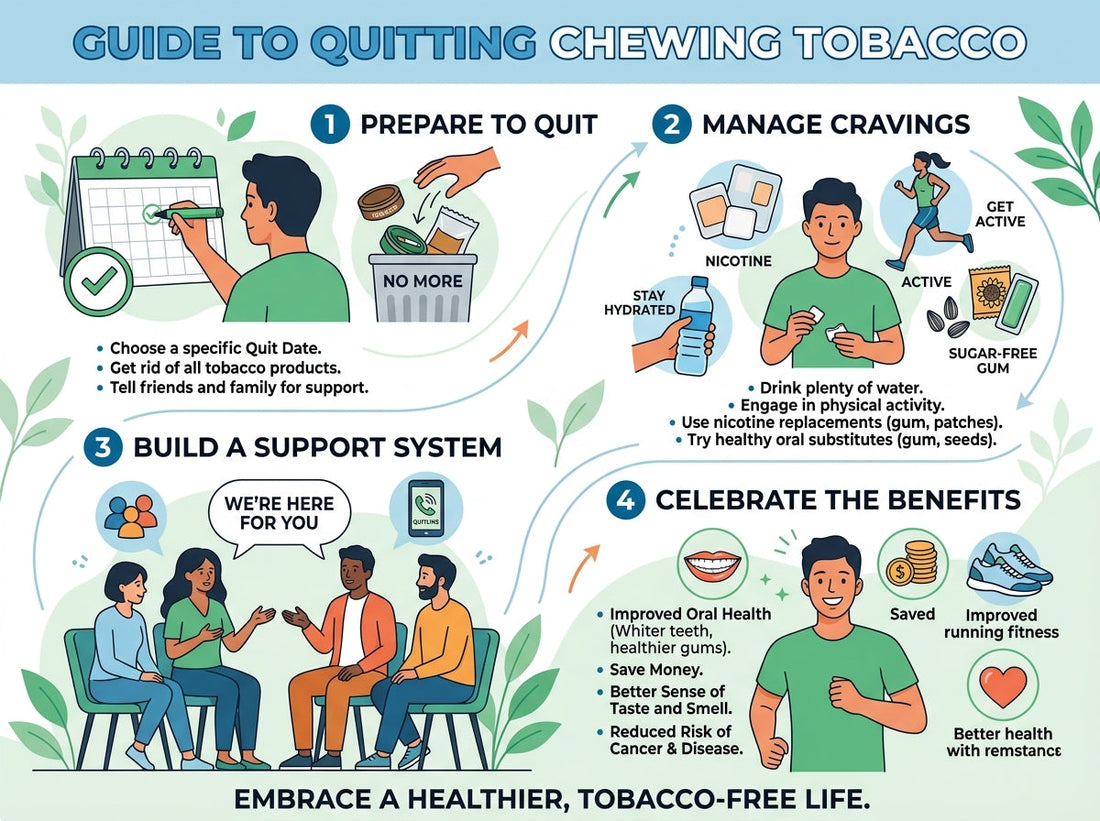
Step 1: Prepare Before You Quit
Preparation is where most people fail. They decide emotionally to quit but don’t prepare practically.
Quitting chewing tobacco is not a single decision — it is a planned behavioral change.
- Pick a quit date: Choose a realistic date within 7–14 days to mentally prepare.
- Identify triggers: Write down when you consume gutkha — chai, after meals, during stress, while traveling.
- Remove availability: Throw away all sachets and avoid storing backups.
- Prepare substitutes: Keep gum, saunf, or cardamom ready before cravings hit.
Users who prepare in advance are significantly more likely to quit successfully than those who rely on impulse decisions.
Step 2: Choose How You’ll Quit
Cold Turkey:
This method involves stopping completely in one day. While it sounds strong, it often fails because withdrawal symptoms (irritability, cravings, restlessness) become overwhelming quickly.
Gradual Reduction:
This approach works better for most users. Instead of stopping suddenly, you reduce frequency step by step:
- 10 times/day → 7 times
- 7 → 5
- 5 → 3
- 3 → 1 → 0
This reduces withdrawal intensity and gives your brain time to adjust.
Step 3: Manage Cravings
Cravings are temporary but intense. Understanding their nature is key.
According to the CDC, nicotine cravings usually last between 10–30 minutes and then reduce naturally.
Instead of fighting cravings, manage them:
- Delay: Wait 10–20 minutes before reacting
- Distract: Engage in activity (walking, work, talking)
- Replace: Use gum, saunf, or cloves
Cravings peak in the first 3–5 days and gradually weaken over time.
👉 Deep read: tambaku ke nuksan
Step 4: Rewire the Habit
Most users think they are addicted to nicotine — but in reality, they are also addicted to patterns.
- After meals → chew
- With chai → chew
- During stress → chew
To quit permanently, you must replace these loops:
- After meals → brush or walk
- With chai → chew saunf
- Stress → breathing or movement
Habit replacement is one of the strongest long-term strategies.
Step 5: Stay Tobacco-Free
The biggest challenge is not quitting — it is staying quit.
- Avoid “just one”: Even one pouch can restart addiction
- Track progress: Count days and milestones
- Stay active: Exercise reduces cravings naturally
- Accept slip-ups: Restart immediately without guilt
👉 Related: how to quit smoking naturally
Most successful quitters fail multiple times before succeeding — consistency matters more than perfection.
Frequently Asked Questions (Quit Gutkha / Chewing Tobacco)
How to quit gutkha permanently?
To quit gutkha permanently, you must treat it as both a nicotine addiction and a behavioral habit.
Most people fail because they try to rely only on willpower. Instead, a successful approach includes:
- Gradually reducing daily consumption instead of quitting suddenly
- Identifying triggers like chai, stress, or boredom
- Replacing the chewing habit with safer alternatives
- Building consistency for at least 3–6 months
Permanent quitting happens when your brain no longer associates gutkha with relief or routine.
Why is chewing tobacco (gutkha, paan, khaini) so addictive?
Chewing tobacco is highly addictive because it combines chemical addiction and habit reinforcement.
- Nicotine: Releases dopamine and creates dependency
- Areca nut: Adds additional stimulation (arecoline)
- High frequency use: 10–20 times daily strengthens habit loops
Unlike smoking, gutkha stays in the mouth longer, increasing exposure and reinforcing addiction faster.
How long does withdrawal from chewing tobacco last?
Withdrawal from chewing tobacco happens in stages:
- Days 1–3: Strong cravings, irritability, headaches
- Week 1: Physical symptoms begin to reduce
- Weeks 2–4: Habit cravings remain strong
- 1–3 months: Brain starts stabilizing
Most relapses happen after 2–4 weeks, not in the first few days.
Understanding this timeline helps you stay prepared instead of reacting emotionally.
Why do people relapse after quitting gutkha?
Relapse is not a failure — it is part of the quitting process.
Common reasons include:
- Triggers like chai, stress, or boredom not being replaced
- Overconfidence after a few days of quitting
- Social environment where others are consuming tobacco
- Lack of a structured quitting plan
To prevent relapse, you must change the system — not just resist cravings.
What can I use instead of gutkha to manage cravings?
Replacing gutkha is one of the most effective strategies because addiction also involves oral fixation.
- Saunf (fennel seeds)
- Elaichi (cardamom)
- Sugar-free chewing gum
- Cloves (laung)
These alternatives help break the chewing habit without introducing addictive chemicals.
The key is to keep substitutes easily available during trigger moments.
Is it better to quit gutkha suddenly or gradually?
For most heavy users, gradual reduction works better than quitting suddenly.
Cold turkey often leads to strong withdrawal and relapse, while gradual reduction allows the brain to adjust slowly.
However, the best method depends on your usage pattern and discipline level.
Can oral damage from gutkha be reversed?
Some damage can improve after quitting, especially in early stages.
- Inflammation and irritation reduce
- Breath and gum health improve
- Taste sensation gradually returns
However, advanced conditions like oral fibrosis or cancer risk may not fully reverse, which is why early quitting is critical.
Focused on tobacco addiction behavior and quitting strategies.
This article is for informational purposes only and does not replace medical advice.
3 comments
I have the habit of chewing gutkha since many year’s
I need to quit
mujhe na gutke khane ki buri lat lag chuki h jese gutka nahi ho to obasi aati h aankho me pani or jee nahi lagta mene kam to kr diye h ab din ke 2/3 hi khata hu par mujhe puri tarh chhodna h achha bhi nahi lagata logo ke bich or mere dath bhi kharb hote ja rahe h