


 & more |
Published: May 13, 2026 | By: Smotect Team | ⏱ 8 min read
🧠 Withdrawal Psychology — What's Normal & What Passes
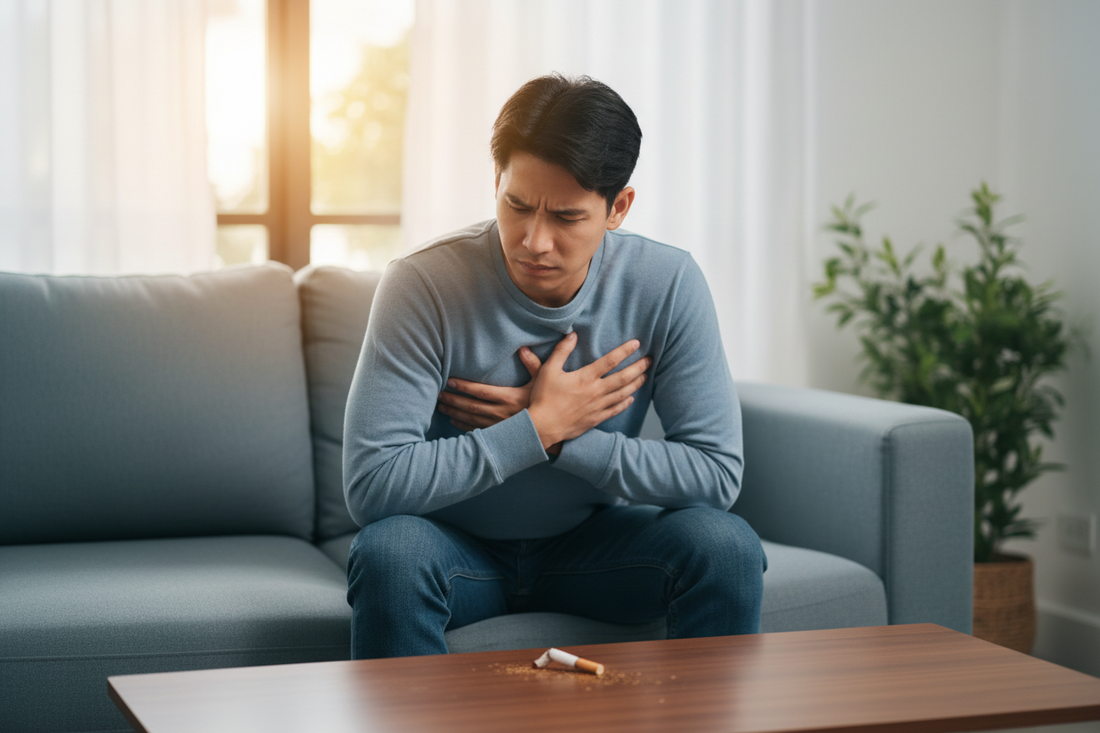
Quitting smoking can cause anxiety, restlessness, and — rarely — panic attacks. But here is the counterintuitive truth: smokers have higher baseline anxiety than non-smokers. After the withdrawal window, ex-smokers consistently score lower on anxiety than active smokers. The anxiety you feel when quitting is the last act of nicotine dependency, not a permanent state.
One of the most common fears about quitting smoking is the anxiety. "I'll be a nervous wreck without cigarettes." "Smoking is the only thing that calms me down." These beliefs feel completely true — because in the short term, they are. A cigarette does reduce the anxiety of a smoker experiencing withdrawal. But that anxiety was caused by not having a cigarette. The cigarette is both the cause and the apparent cure of the same anxiety.
Understanding this loop — and knowing exactly what happens to anxiety over the weeks and months after quitting — is one of the most important pieces of information for anyone attempting cessation. The anxiety is real. It is predictable. And it passes.
The Counterintuitive Truth About Smoking and Anxiety
🧠 The Anxiety Paradox of Smoking
Smoking doesn't relieve anxiety — it creates the anxiety it then appears to relieve.
How the loop works: Nicotine creates dependency by upregulating nicotinic acetylcholine receptors. Between cigarettes, as nicotine levels fall, receptor activation decreases — producing a state of increased anxiety, restlessness, and irritability. This is withdrawal. A cigarette relieves this state immediately — producing the sensation of "stress relief." But the cigarette also creates the next withdrawal cycle, which will produce the next anxiety, which will require the next cigarette.
The net result: Smokers are chronically cycling between withdrawal-induced anxiety and nicotine-induced relief — maintaining a higher average anxiety level than non-smokers, while believing the cigarettes are helping them manage anxiety. Research consistently confirms: on validated anxiety scales, smokers score higher than non-smokers and ex-smokers score lower than smokers after withdrawal resolves.
Two Types of Anxiety When Quitting — Very Different Mechanisms
⚗️ Withdrawal Anxiety — Pharmacological
Days 1–14 — peaks Days 3–5
Direct result of nicotinic receptor downregulation as nicotine levels fall. Feels like: general restlessness, inability to concentrate, irritability, physical tension, and sometimes acute anxiety spikes. This type is purely pharmacological — it has no psychological trigger. It is the body's neurochemistry recalibrating without nicotine support.
What it responds to: Pharmacological support (Smotect Azaadi, NRT), deep breathing, physical exercise, the reassurance that it will peak and pass within the predictable window.
🧠 Situational Anxiety — Psychological
Weeks 2–12 — specific triggers
Conditioned anxiety triggered by situations where smoking previously provided coping — work stress, social situations, after meals, with alcohol. The specific situation triggers anticipatory anxiety in the absence of the previously available coping tool. This type is psychological — it requires behavioural, not pharmacological, responses.
What it responds to: Pre-planned alternative coping responses for specific situations, mindfulness techniques, gradual exposure to trigger situations with new coping tools, social support.
The Anxiety Timeline — What to Expect Week by Week
Peak withdrawal begins
Physical craving and anxiety intensify as nicotine clears. Restlessness, irritability, concentration difficulty. This is the most acutely uncomfortable window. Pharmacological support is most important here. The peak is coming — prepare for it, don't be surprised by it.
Withdrawal anxiety at its peak
The highest intensity anxiety window. Nicotine has cleared; receptors are recalibrating. This is when most relapses occur. Have your support system fully in place before this window arrives. The intensity here is not indicative of how you will feel in Week 3.
Physical withdrawal easing — situational anxiety emerging
Chemical withdrawal anxiety decreasing. Situational anxiety — triggered by specific cues — becomes more prominent. Mood typically beginning to stabilise. Sleep quality beginning to improve. The hardest pharmacological window is passing; behavioural work becomes more important.
Anxiety below smoking baseline for most people
Chemical dependency largely resolved. Many ex-smokers first notice that their general anxiety level is lower than it was while smoking — the paradox becoming experientially real. Situational cravings persist but are more manageable. Mood stability improving significantly.
Sustained lower anxiety than smoking period
Research confirms: at 6 months, ex-smokers score measurably lower on standardised anxiety scales than they did while smoking. The long-term anxiety benefit of quitting is one of the most consistent and least publicised findings in cessation research.
Does Quitting Smoking Cause Panic Attacks?
A panic attack — by clinical definition — involves intense fear with physical symptoms (racing heart, shortness of breath, chest tightness, dizziness) that peak within 10 minutes and often include a sense of impending doom or loss of control. These symptoms can overlap with severe nicotine withdrawal symptoms — creating diagnostic confusion.
The distinction matters because: mild withdrawal anxiety responds to the coping tools below and resolves with time. Clinical panic attacks may require specific pharmacological or psychological treatment that cessation support alone doesn't provide. If you are experiencing severe, recurring panic attacks after quitting, speak with a doctor before continuing without professional support.
7 Evidence-Based Anxiety Management Tools for Quitting Smokers
4-7-8 Breathing — The Fastest Anxiety Reducer Available
Inhale for 4 counts, hold for 7, exhale for 8. This specific pattern activates the parasympathetic nervous system — the physiological "brake" on the stress response — within 3–4 breathing cycles. It is the most immediately effective, pharmacology-free anxiety management tool available. Use it at the first sign of craving-related anxiety.
Why it works: Extended exhalation activates the vagus nerve, triggering parasympathetic response that directly counters the sympathetic stress activation of withdrawal anxiety.
Physical Exercise — 20 Minutes Changes Brain Chemistry
Aerobic exercise produces endorphins, BDNF, and dopamine — the same neurotransmitters that nicotine was providing. A 20-minute brisk walk at peak craving time is one of the most evidence-backed anxiety reduction tools in cessation research. It works within minutes and produces anxiety reduction that lasts hours.
Research: Smokers who exercise during cessation have significantly lower withdrawal anxiety scores and higher cessation success rates than those who don't.
RAIN Mindfulness Technique for Acute Anxiety
Recognise ("This is withdrawal anxiety"), Allow it without fighting ("It will pass"), Investigate the body sensation (where is it? what does it feel like exactly?), Nurture yourself through it (water, breathing, movement). This technique converts anxiety from an emergency requiring action into an observable experience that passes on its own.
iQuit App + Streak Tracking — Anxiety Reframed as Progress
Opening the iQuit app at a moment of anxiety converts the experience from "I am suffering" to "I am at Day 8, ₹1,200 saved, 60 cigarettes not smoked." This cognitive reframe — from loss framing to gain framing — measurably reduces anxiety intensity by redirecting attention toward progress rather than absence.
Ashwagandha (in Smotect Azaadi) — Adaptogenic Anxiety Support
Ashwagandha's withanolides have documented adaptogenic properties — reducing cortisol levels, supporting HPA axis regulation, and reducing anxiety scores in controlled studies. As a component of Smotect Azaadi, it provides pharmacological anxiety support that specifically addresses the stress response during the withdrawal window.
Clinical evidence: Ashwagandha supplementation reduces anxiety scores on validated scales by 44% vs placebo in stressed adults — relevant for the acute stress of cessation.
Quitline Counselling — Real-Time Anxiety Support
National Tobacco Quitline 1800-11-2356 (toll-free) provides trained cessation counsellors available to talk through acute anxiety during the withdrawal window. Talking to another person during a peak anxiety moment — the social connection itself — activates oxytocin and reduces cortisol. This is one of the simplest and most effective real-time anxiety management tools available.
🌬️ 4-7-8 Breathing — Do This Right Now
The fastest anxiety reducer available — 3 cycles, 90 seconds
Inhale slowly through nose for 4 counts
Hold breath gently for 7 counts
Exhale completely through mouth for 8 counts
Repeat 3–4 cycles. Anxiety reducing from Cycle 2.
Smotect Azaadi — Manages Withdrawal Anxiety Naturally
Ashwagandha (adaptogen, cortisol reduction), Kapikacchu (dopamine restoration), Brahmi (cognitive anxiety support) — three herbs in Smotect Azaadi specifically address the anxiety dimensions of nicotine withdrawal. Support the recalibration, not just the craving.
Does quitting smoking cause anxiety and panic attacks?
Quitting smoking commonly causes heightened anxiety during the withdrawal period (Days 1–14) — this is a direct pharmacological effect of nicotine receptor recalibration as nicotine levels fall. Full panic attacks are possible but rare, and more likely in people with pre-existing anxiety disorders. Most people experience manageable withdrawal anxiety that peaks at Days 3–5 and substantially resolves within 2–4 weeks. After the withdrawal window, ex-smokers consistently score lower on anxiety measures than active smokers.
How long does anxiety last after quitting smoking?
Withdrawal-related anxiety peaks at Days 3–5 and substantially resolves within 2–4 weeks. Situational anxiety — triggered by specific cues where smoking previously occurred — may persist for weeks to months but reduces progressively with each successful non-smoking response to the trigger. At 6 months post-quit, most ex-smokers report lower anxiety than they experienced while smoking — the research-documented long-term mental health benefit of cessation.
Is the anxiety from quitting smoking normal?
Yes — completely. Withdrawal anxiety is a predictable, documented pharmacological consequence of nicotine removal from a dependent nervous system. It is not a personal weakness, a sign that quitting is wrong for you, or an indicator of how you will feel permanently. It is the recalibration process — temporary, predictable, and manageable with the right tools. Knowing it is coming and having specific coping tools ready dramatically reduces its impact on cessation success.
How to manage anxiety when quitting smoking?
Seven evidence-based tools: 4-7-8 breathing (fastest, immediate), aerobic exercise (produces natural dopamine and endorphins), RAIN mindfulness technique (converts anxiety from emergency to observation), iQuit app streak tracking (cognitive reframe), pharmacological support (Smotect Azaadi's Ashwagandha and Brahmi), Quitline counselling (1800-11-2356, real-time support), and social accountability (tell someone your quit date and progress). Using multiple tools simultaneously provides the most comprehensive coverage.
Will I feel better mentally after quitting smoking?
Yes — and significantly better than while smoking, despite the difficult withdrawal period. Research consistently shows ex-smokers at 6 months score lower on standardised anxiety and depression measures than they did while actively smoking. The temporary discomfort of the withdrawal window is followed by sustained improvement in mental wellbeing — better mood stability, lower baseline anxiety, improved sleep quality, and better emotional regulation. The mental health case for quitting is as strong as the physical health case.
The anxiety of quitting smoking is one of the most misunderstood aspects of cessation. It is real, it is temporary, it is the last act of nicotine dependency — and it is followed by a sustained reduction in anxiety that most smokers never experience while actively smoking. The withdrawal window is difficult because it is designed by the brain's dependency mechanisms to be difficult enough to drive relapse. Understanding this design, having specific tools ready for each type of anxiety, and knowing the timeline removes the power of the unknown from the equation.
For informational purposes only. If experiencing severe panic attacks, consult a qualified mental health professional. National Quitline: 1800-11-2356.